Europe is rarely the first region divers mention when talking about large marine life. The imagination tends to drift elsewhere — the Pacific, perhaps, or isolated tropical archipelagos where encounters feel almost guaranteed by reputation alone.
And yet, some of the most atmospheric big-animal dives happen in European waters.
Not because they are easier. Often the opposite. Conditions shift more. Weather matters more. Encounters feel less curated and, perhaps because of that, more memorable when they do happen.
Big-animal diving in Europe tends to unfold slowly. There’s more waiting. More scanning of open water. More uncertainty is woven into the experience itself. For some divers, that unpredictability becomes part of the appeal.
Why big-animal diving changes the pace of a dive
Large marine life alters diver behaviour almost immediately.
Reef dives often encourage movement. You follow terrain, check crevices, and move steadily from one feature to another. Big-animal dives tend to slow everything down. Attention shifts outward instead of downward. You stop searching the reef and start reading the water.
Anticipation becomes part of the environment.
Sometimes nothing appears for long stretches. Then a silhouette forms in the distance and the entire emotional pace of the dive changes without anyone speaking.
That waiting can feel frustrating at first. Later, many divers began valuing it.
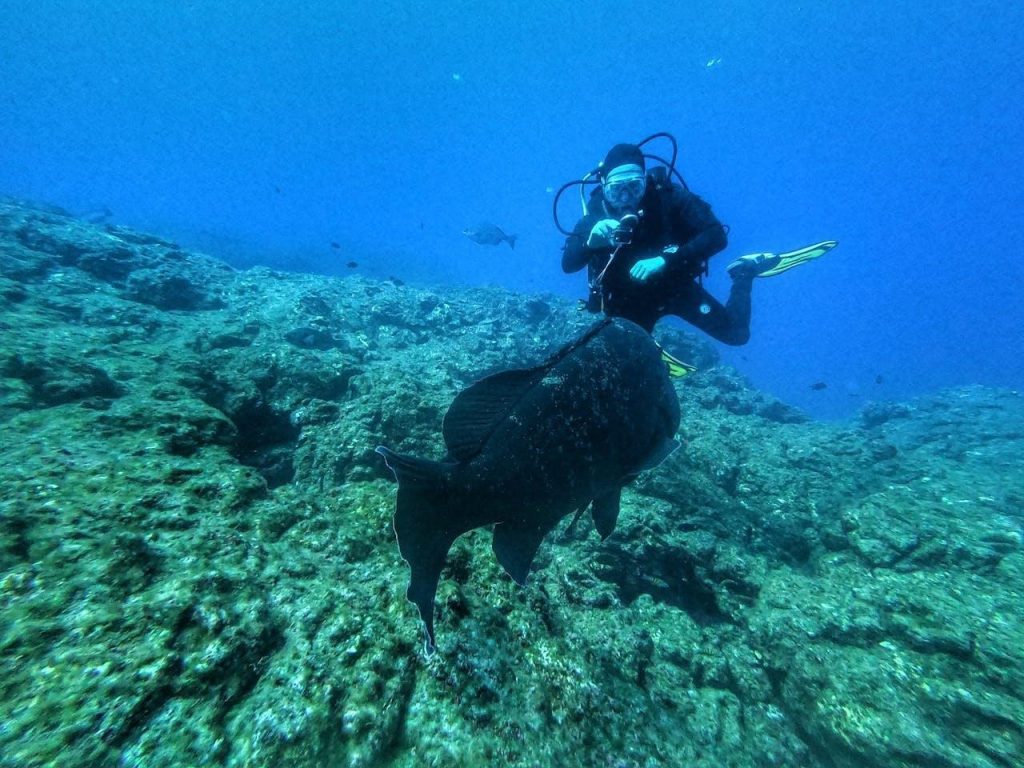
The Azores — Europe’s most compelling blue-water experience
The Azores occupies a very particular space in European diving.
These islands sit deep in the Atlantic, surrounded by offshore seamounts and migratory routes that create the feeling of genuine open-ocean exposure. You sense it before entering the water. The environment feels expansive rather than enclosed.
Mobulas appear from blue water almost without warning. Blue sharks materialise at depth, then drift closer with measured curiosity. Seasonal whale migration routes add another layer to the atmosphere, even on dives where no large animals appear at all.
That sense of unpredictability is part of what makes diving in the Azores feel so immersive.
Encounters here rarely feel staged. There’s distance involved. Space. Animals move through the water on their own terms, and divers adapt accordingly. The result is less about spectacle and more about presence.
Iceland — where the environment shapes the encounter
Iceland offers a very different kind of scale.
The underwater environment itself often dominates the emotional experience before marine life even enters the picture. Volcanic rock formations, glacial water, and extraordinary visibility create a sense of stillness that feels almost unreal at times.
Large marine life encounters here can feel quieter than in warmer destinations. Seals glide rather than charge past. Pelagic sightings tend to emerge subtly through exceptionally clear water, giving divers longer to register movement and distance.
The cold changes awareness too. Divers move more deliberately. Breathing becomes something you notice rather than ignore. Everything slows slightly, including your perception of time underwater.
Beyond the water, many divers choose to explore Iceland by campervan, allowing easy access to the country’s dramatic coastlines, volcanic scenery, and remote natural attractions. Companies such as Cozy Campers offer a flexible way to experience more of the island between dive excursions.
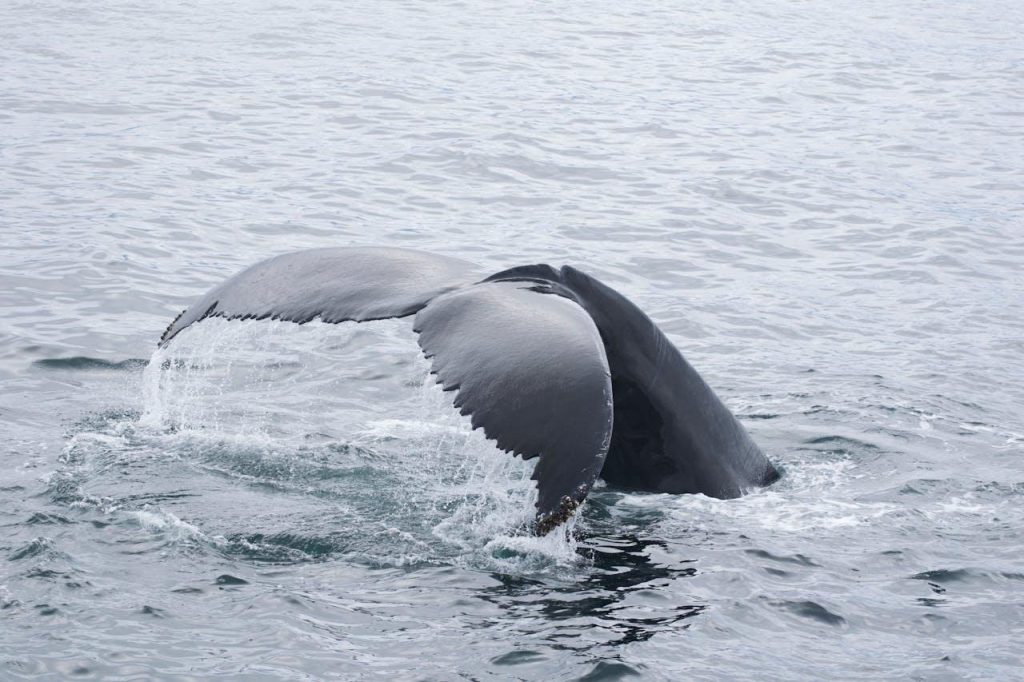
Norway — enormous presence in cold, dark water
If the Azores feels open and fluid, Norway feels heavier somehow. More deliberate.
Orca and humpback encounters in northern Norwegian waters carry a kind of emotional weight that’s difficult to explain cleanly. Perhaps it’s the darkness of the water. Or the silence. Or simply the scale of these animals moving slowly beneath the surface.
There’s less visual chaos here than on tropical reefs. Less colour, fewer distractions. When something large appears, it dominates attention completely.
And unlike faster shark encounters, marine mammals often alter the emotional tone of the dive itself. Divers become quieter around them, almost instinctively.
Malta — where visibility creates scale
Malta approaches big-animal diving differently again.
The Mediterranean rarely overwhelms with abundance, but visibility and underwater topography create a strong sense of openness. Steep walls disappear into blue water. Drop-offs feel spacious rather than crowded. Pelagic movement often happens at the edge of perception rather than directly in front of you.
That distance matters.
Tuna, passing rays, and occasional larger pelagics gain impact because the surrounding water feels so clear and exposed. The environment creates scale even when the encounters themselves are brief.
Why Europe’s big-animal diving feels less curated
One of the defining characteristics of European big-animal diving is uncertainty.
Weather windows matter. Offshore conditions change plans. Visibility fluctuates. Migration timing shifts subtly from season to season. Success is never entirely guaranteed, no matter how experienced the operator or optimistic the forecast.
That uncertainty can absolutely feel frustrating. But it also changes how divers engage with the experience.
Instead of expecting encounters on demand, divers begin appreciating conditions, atmosphere, and possibility as part of the dive itself. The anticipation becomes inseparable from the reward.
Cold water and warm water create different kinds of focus
Warm-water diving encourages relaxation. The body settles quickly. Movement softens. Attention expands naturally.
Cold-water diving sharpens things.
You notice your breathing earlier. Positioning becomes more deliberate. The environment asks more of your awareness, even before marine life appears. Neither approach is inherently better, but they produce different emotional textures underwater.
European diving often sits somewhere between those extremes — physically demanding enough to keep you alert, but immersive enough to reward patience.
Visibility changes the emotional impact of large animals
Visibility influences more than photography or navigation. It shapes how encounters feel emotionally.
In clearer water, large animals emerge gradually. Divers notice movement before detail. Shapes form at distance, giving the mind time to anticipate what’s approaching.
That anticipation can become more memorable than the closest point of the encounter itself.
The Azores does this particularly well. So does Malta in a completely different way. Even Norway, despite darker water, creates moments where silhouettes appear slowly enough to feel almost cinematic.
Big-animal dives are often remembered for atmosphere, not proximity
Some encounters stay distant. Others last only seconds. Occasionally, conditions never quite align and the animals remain somewhere beyond visibility altogether.
And still, the dives remain memorable.
Because what lingers afterward is often atmosphere rather than certainty. The feeling of suspended attention. The quiet shift in group behaviour. The sense that the ocean was holding possibility just beyond clear definition.
Europe rewards divers who are comfortable with that ambiguity.
Not every encounter resolves neatly. Some only unfold briefly, then disappear back into the water they came from.