Agra, Uttar Pradesh, is famous for its Mughal heritage, iconic monuments, street food, and rich history. Around 40 km west of Agra, Fatehpur Sikri is one of the most important historical destinations in the region.
Built by Mughal Emperor Akbar during the second half of the 16th century, Fatehpur Sikri briefly served as the capital of the Mughal Empire. Today, it is a UNESCO World Heritage Site, known for its red-sandstone palaces, courtyards, mosques, gateways, and remarkable blend of Persian, Islamic, and Indian architectural traditions.whc.unesco
This guide covers the current Fatehpur Sikri ticket price, timings, history, top attractions, travel options, and visitor tips.
Fatehpur Sikri Entry Fee
The official Fatehpur Sikri monument entry fee depends on the visitor’s nationality and age.

| Tourist Type | Ticket Price |
|---|---|
| Indian Citizens | 50 Rs |
| Foreign Visitors | 610 Rs |
| SAARC and BIMSTEC Countries Visitors | 50 Rs |
| Children Below 15 Years Old | Free |
SAARC and BIMSTEC visitor categories include countries such as Bangladesh, Nepal, Bhutan, Sri Lanka, Myanmar, Thailand, Maldives, Pakistan, and Afghanistan, subject to the official eligibility list.
Note: Check the final ticket amount and any local tourism levy at the official booking portal or monument counter before visiting. Fees can be revised by the relevant authorities.
Fatehpur Sikri Timings
Fatehpur Sikri is generally open to visitors every day from sunrise to sunset. It is not a 24-hour attraction.
| Detail | Timing |
|---|---|
| Opening time | Sunrise |
| Closing time | Sunset |
| Closed day | No regular weekly closure |
| Best visit time | Early morning or late afternoon |
| Ideal visit duration | 2–3 hours |
The exact opening and closing time changes seasonally with daylight. Instead of publishing fixed summer and winter hours, use “sunrise to sunset” because this is the official ASI guidance.
Best Time of Day
- Morning: Cooler weather, smaller crowds, better for a relaxed visit.
- Late afternoon: Softer light for photos and a less harsh temperature.
- Friday midday: The Jama Masjid and Dargah area can be busier due to prayers
About Fatehpur Sikri
Fatehpur Sikri was developed by Akbar as an imperial capital between approximately 1571 and 1585. It was built near the settlement of Sikri, associated with the Sufi saint Sheikh Salim Chishti.
According to tradition, Akbar visited Sheikh Salim Chishti seeking blessings for an heir. After the birth of his son, Prince Salim—later Emperor Jahangir—Akbar built the new capital near the saint’s residence.
The name Fatehpur means “City of Victory.” UNESCO notes that Fatehpur Sikri served as the Mughal capital for only about 10 years before Akbar moved his capital to Lahore in 1585. The city remained important for temporary imperial visits afterward.
The exact reason for Fatehpur Sikri’s decline remains debated. Water-supply difficulties are often mentioned, but historians also associate the move with strategic and political priorities, including campaigns toward the north-western frontier.
How To Reach Fatehpur Sikri?
Road travel is the most convenient way to reach Fatehpur Sikri from Agra.
- From Agra: Around 40 km; usually 1–1.5 hours by cab or private car.
- From Delhi: Around 230 km; approximately 4–5 hours, depending on traffic.
- From Jaipur: Around 210 km; approximately 4–5 hours.
You can travel by:
- Private car
- Taxi
- App-based cab
- UPSRTC bus
- Tourist coach
By Train
Fatehpur Sikri Railway Station is the nearest railhead, but it has limited connectivity. Most tourists prefer reaching Agra Cantt Railway Station, then continuing to Fatehpur Sikri by taxi, bus, or tour vehicle.
Agra Cantt is well connected with Delhi, Jaipur, Mumbai, Varanasi, Lucknow, and other major cities. Premium services such as Gatimaan Express and Shatabdi Express connect Delhi with Agra.
By Air
Agra Airport has limited scheduled connectivity, so most domestic and international travellers use Indira Gandhi International Airport, Delhi, and continue by train or road.
For most visitors, the best route is:
- Reach Agra by train, road, or flight.
- Take a taxi or local tour vehicle from Agra to Fatehpur Sikri.
- Combine Fatehpur Sikri with Agra Fort, the Taj Mahal, or an onward Jaipur journey.
Read More: Agra Fort Ticket Price Timings || Nicco Park Ticket Price, Kolkata
Historical Background Of Fatehpur Sikri
Fatehpur Sikri was built between 1571 and 1585 by Emperor Akbar. He planned it as the great capital. The city was frankly built on the site of a village called Sikri where Akbar had met a Sufi saint called Sheikh Salim Chishti. The saint foretold the birth of Akbar’s heir that came true, and to honor him, the emperor laid the foundation of his new capital there. The name “Fatehpur,” which means “City of Victory,” reflects Akbar’s military wins.
But magnificent as it was, Fatehpur Sikri had one major flaw: too little water. It turned out to be both logistically unsound and politically impossible. The city was abandoned in 1585, just 14 years after its completion.
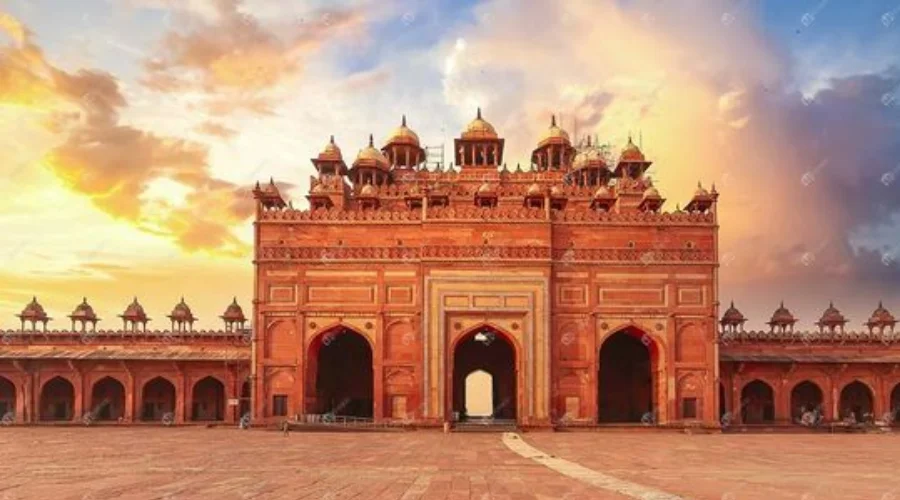
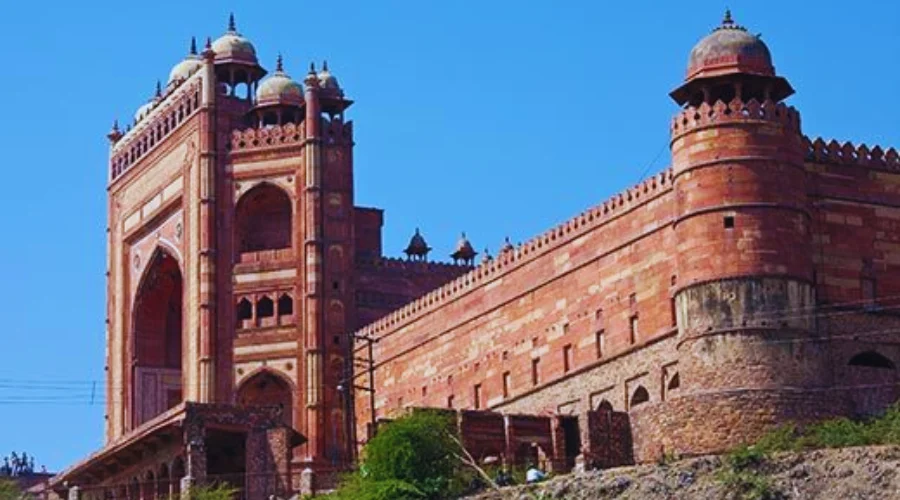
Fatehpur Sikri Photos



Fatehpur Sikri Location
- Fatehpur Sikri, Agra Uttar Pradesh, India
Top Places to Visit
Fatehpur Sikri is a large heritage complex. Plan at least two hours to explore its main structures comfortably.
Buland Darwaza
Buland Darwaza, meaning “Gate of Magnificence,” is the dramatic gateway to the Jama Masjid complex. Akbar commissioned it to celebrate his Gujarat victory. Its monumental staircase and high red-sandstone façade make it one of the most photographed structures in Fatehpur Sikri.
Jama Masjid
Jama Masjid is one of the earliest major congregational mosques built during the Mughal period. The vast courtyard, grand arches, and red-sandstone architecture make it a central feature of the site.
Panch Mahal is a five-storey, open-sided pavilion supported by numerous columns. Its tiered design allowed air circulation and wide views across the royal complex.
Jodha Bai’s Palace
Often called Jodha Bai’s Palace, this is the largest residential complex at Fatehpur Sikri. It displays a blend of regional Indian, Rajput, and Mughal architectural elements. Because historical identification of individual royal residences is debated, it is better to describe it as a major royal residential palace rather than make definite claims about its occupant.
Birbal’s House
Birbal’s House is a small but beautifully detailed building associated by tradition with Birbal, one of Akbar’s well-known courtiers. Its intricate carvings and compact planning make it worth visiting.
Anup Talao
Anup Talao is a square ornamental water tank surrounded by stone walkways and platforms. It was part of the royal court area and remains a peaceful photography point.
Ibadat Khana
The Ibadat Khana, or House of Worship, was associated with Akbar’s religious discussions and debates. Scholars from various faiths were invited to participate in intellectual and theological conversations.
Hiran Minar
Hiran Minar is a distinctive tower located within the Fatehpur Sikri complex. It is often linked with Akbar’s interest in hunting and animals, though stories about its exact purpose vary.
Mariam-uz-Zamani’s Tomb
Mariam-uz-Zamani’s Tomb is located outside the main Fatehpur Sikri complex, toward Sikandra. It is associated with the mother of Emperor Jahangir and is best visited as part of a broader Agra heritage circuit.
Also Read: Wonderla Kochi Ticket Price || Wonderla Hyderabad Ticket Price
One-Day Agra–Fatehpur Sikri Plan
If you are short on time, use this practical itinerary:
| Time | Activity |
|---|---|
| 6:00–8:00 AM | Visit the Taj Mahal |
| 8:30–9:30 AM | Breakfast and travel toward Fatehpur Sikri |
| 10:30 AM–1:00 PM | Explore Fatehpur Sikri |
| 1:00–2:00 PM | Lunch |
| 3:00–5:00 PM | Visit Agra Fort or Itmad-ud-Daulah |
| Evening | Mehtab Bagh or local market visit |
If you are travelling from Jaipur to Agra, Fatehpur Sikri is an excellent stop on the way.
Visitor Tips
- Arrive early to avoid heat, queues, and large tour groups.
- Wear comfortable shoes because the monument complex requires substantial walking.
- Carry water, sunscreen, sunglasses, and a cap during summer.
- Dress modestly when visiting the Jama Masjid and Sufi shrine area.
- Remove footwear where required near the Dargah.
- Respect prayer areas and follow instructions from monument staff.
- Do not write on walls, climb structures, or litter.
- Ask before photographing worshippers or religious activities.
- Be cautious of unsolicited guides; hire only authorised guides if you want a guided tour.
- Keep your monument ticket safe until you complete your visit.
Best Time to Visit
The best time to visit Fatehpur Sikri is from October to March, when the weather is cooler and more comfortable for outdoor exploration.
| Season | Visiting experience |
|---|---|
| October–March | Best weather for sightseeing |
| April–June | Very hot; visit early morning only |
| July–September | Rain possible, greener surroundings, humid conditions |
| Weekdays | Usually less crowded |
| Weekends and holidays | More visitors and tour groups |
FAQs
What is the Fatehpur Sikri ticket price?
The official entry fee is ₹50 for Indian, SAARC, and BIMSTEC visitors, ₹610 for other foreign visitors, and free for children below 15 years.
What are the Fatehpur Sikri timings?
Fatehpur Sikri is open daily from sunrise to sunset. Exact timings change with the season.
Is Fatehpur Sikri closed on Friday?
No. Fatehpur Sikri is generally open daily. However, the Jama Masjid and Dargah area may be more crowded around Friday prayers.
How far is Fatehpur Sikri from Agra?
Fatehpur Sikri is around 40 km from Agra and generally takes about 1–1.5 hours by road, depending on traffic.
Why was Fatehpur Sikri abandoned?
Akbar shifted the capital to Lahore in 1585. Water-supply challenges are often cited, but strategic and political reasons also likely contributed to the move.
How long did Fatehpur Sikri remain the Mughal capital?
It served as the Mughal capital for around 10 years, between approximately 1571 and 1585.
How many gates are there in Fatehpur Sikri?
The historic walled city had several gates, including the Delhi Gate, Agra Gate, Ajmeri Gate, Gwalior Gate, Tehra Gate, Chandanpal Gate, and others. The exact list can differ by historical source and whether smaller access gates are counted.
What was the Ibadat Khana at Fatehpur Sikri?
The Ibadat Khana was a building associated with Akbar’s religious and philosophical discussions with scholars from different faiths.